
《哈氏合金 Hastelloy C-2000 (UNS N06200) 深度技术百科:全能型腐蚀控制的科学与实践》
Technical Intro: The Evolutionary Leap in Ni-Cr-Mo Alloys
In the demanding landscape of high-end chemical process industries (CPI), material reliability is not just a preference—it is a critical safety and economic mandate. Hastelloy C-2000 (UNS N06200) represents the most significant evolutionary leap in the Ni-Cr-Mo alloy family, specifically designed to handle the most aggressive corrosive environments known to modern engineering. While predecessors like Hastelloy C-4, C-22, or the venerable C-276 offered exceptional performance in specific environments, C-2000 was engineered with a "no-compromise" philosophy to provide universal resistance across a broader spectrum of corrosive media than ever before.
Shanghai Hangbo Alloy Group, with over 15 years of supply chain reliability and technical excellence, has been at the forefront of providing these advanced materials to global chemical giants. Our expertise ensures that every gram of C-2000 delivered meets the stringent requirements of reactors, heat exchangers, and piping systems where failure is not an option. We understand that in industries like pharmaceutical manufacturing, agrochemical production, and waste treatment, the cost of downtime far outweighs the initial investment in superior materials. This technical encyclopedia aims to provide engineers and procurement professionals with the depth of knowledge required to make informed decisions about Hastelloy C-2000.
The core philosophy behind C-2000 is "true versatility." By optimizing the chromium and molybdenum levels and introducing a deliberate, precise addition of copper, this alloy breaks the traditional metallurgical trade-off between oxidizing and reducing environment resistance. It is the ultimate solution for complex chemical processes that cycle between diverse chemical states or utilize multi-purpose reactors where the chemical environment can change from batch to batch.
Metallurgical Principles: The "Copper Addition" Advantage
The secret to Hastelloy C-2000's unparalleled performance lies in its precise and balanced metallurgical chemistry. Traditional Ni-Cr-Mo alloys primarily rely on high chromium (Cr) for oxidizing resistance and high molybdenum (Mo) for reducing resistance. However, C-2000 takes this a step further by introducing copper into the matrix.
The Copper (Cu) Factor: C-2000 contains approximately 1.6% copper. This addition is not accidental; it is a calculated metallurgical intervention. Copper specifically enhances the alloy's resistance to sulfuric acid, especially in dilute to medium concentrations where other nickel alloys might struggle. While chromium provides a robust passive film against oxidizing acids like nitric acid, the copper addition fortifies the alloy's stability in reducing environments where molybdenum alone might fall short. This "triple threat" of Cr, Mo, and Cu makes C-2000 unique.
Chemical Composition Deep Dive:
Nickel (Ni): Balance (~59%)
Chromium (Cr): 23% - Provides oxidizing acid resistance and high-temperature stability.
Molybdenum (Mo): 16% - Provides reducing acid resistance and pitting/crevice resistance.
Copper (Cu): 1.6% - Enhances sulfuric acid resistance.
Iron (Fe): <= 2% - Controlled to maintain phase stability.
Silicon (Si) & Manganese (Mn): Controlled to trace levels to prevent grain boundary precipitates.
Synergistic Chemistry and PREN: With 23% Chromium and 16% Molybdenum, C-2000 maintains a high Pitting Resistance Equivalent Number (PREN). The calculation (PREN = Cr + 3.3Mo) yields a value of approximately 74, which is significantly higher than many other high-performance alloys. This ensures that the alloy is virtually immune to localized attacks such as pitting and crevice corrosion, even in hot, high-chloride environments such as those found in flue gas desulfurization (FGD) systems or offshore applications. The metallurgical stability also prevents the formation of grain-boundary precipitates during welding, preserving the corrosion resistance in the heat-affected zone (HAZ).
Manufacturing Excellence: Forging the Future of Reliability
At Shanghai Hangbo Alloy Group, we believe that the quality of an alloy is determined long before it reaches the customer. Our C-2000 production involves a rigorous multi-stage refining and processing regimen that goes beyond standard industry practices.
VIM+ESR/VAR Refining: To achieve "zero-impurity" delivery, we utilize Vacuum Induction Melting (VIM) followed by Electroslag Remelting (ESR) or Vacuum Arc Remelting (VAR). The VIM process allows for precise control of the chemical composition and removal of dissolved gases. The subsequent ESR or VAR refining process further cleans the metal, removing non-metallic inclusions and ensuring a highly homogeneous ingot. This process eliminates gaseous impurities like oxygen and nitrogen and minimizes sulfur and phosphorus to trace levels, ensuring a clean microstructure and superior mechanical properties that can withstand extreme stresses.
Forging Ratio and Microstructural Control: We enforce a minimum forging ratio of >= 3:1. This high ratio is essential for breaking down the as-cast dendritic structure of the ingot and ensuring a fine, uniform grain size throughout the entire cross-section of the finished product. Precise thermal cycle control during forging prevents the precipitation of deleterious phases like mu or sigma phases. These intermetallic phases can compromise both the toughness and the corrosion resistance of the material. Our state-of-the-art forging facilities allow us to control temperatures within +/- 10°C throughout the process.
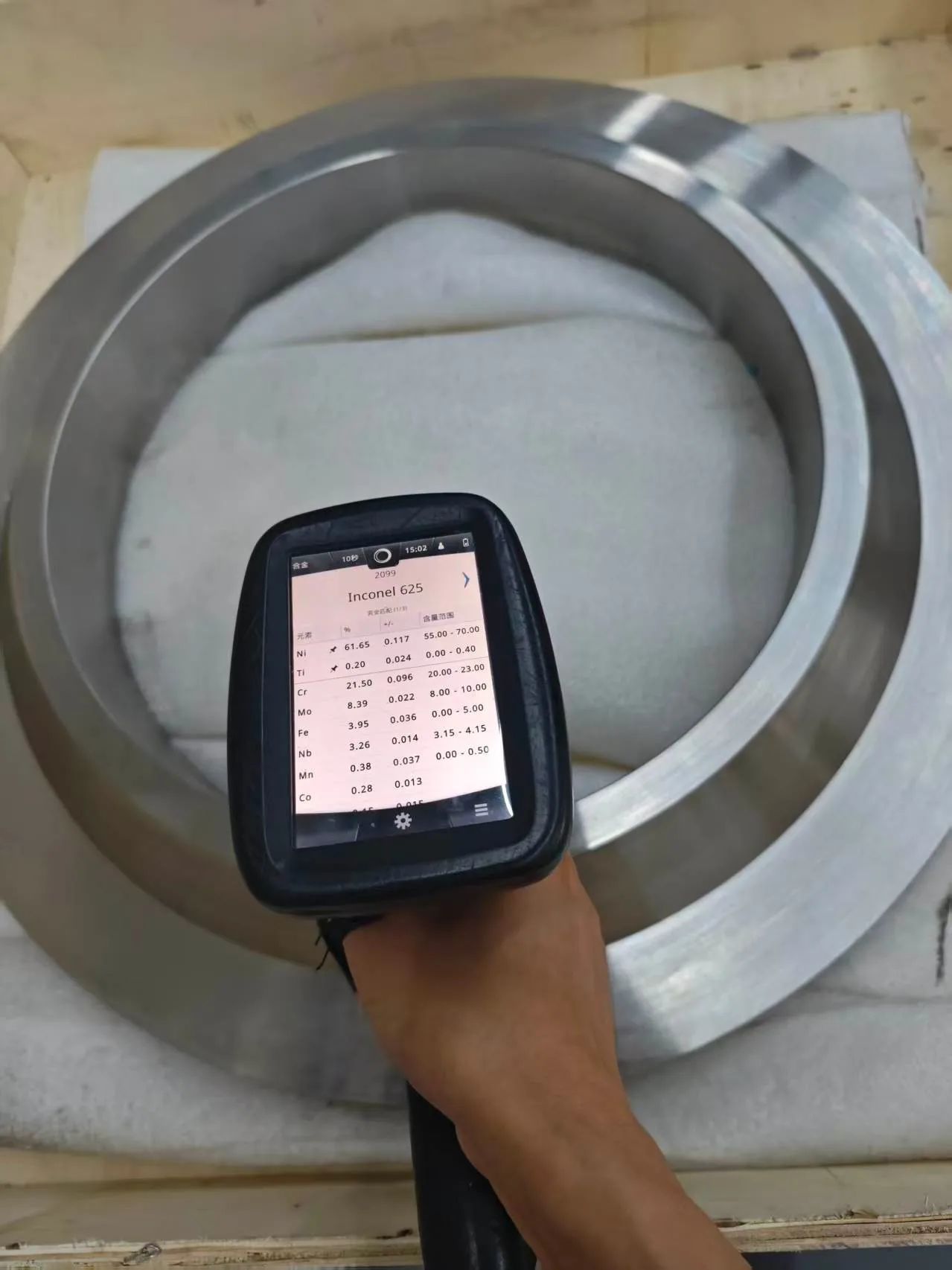
航舶合金Hastelloy C-2000光谱成分实测:确保每一批次化学成分精准合规
ASTM Compliance (B574/B575): Mechanical Property Comparison
Ensuring compliance with international standards like ASTM, ASME, and DIN is non-negotiable for Hangbo. Below is a granular data table comparing the typical mechanical properties of C-2000 across various product forms. These properties are verified through rigorous testing in our ISO-certified laboratories.
| Product Form | Standard Specification | Tensile Strength (MPa) | Yield Strength (0.2% Offset, MPa) | Elongation in 2 inches (%) | Hardness (Rockwell B) |
|---|---|---|---|---|---|
| Plate / Sheet / Strip | ASTM B575 / ASME SB-575 | >= 690 (100 ksi) | >= 310 (45 ksi) | >= 45 | <= 100 |
| Bar / Rod / Wire | ASTM B574 / ASME SB-574 | >= 690 (100 ksi) | >= 310 (45 ksi) | >= 45 | <= 100 |
| Forgings / Flanges | ASTM B564 / ASME SB-564 | >= 690 (100 ksi) | >= 310 (45 ksi) | >= 40 | <= 100 |
| Seamless / Welded Pipe | ASTM B619 / B622 | >= 690 (100 ksi) | >= 310 (45 ksi) | >= 45 | - |
These values represent the minimum requirements set by the ASTM standards. At Hangbo, our measured values typically exceed these standards by 10-15%. For example, our C-2000 sheets often exhibit elongation values exceeding 55%, providing exceptional formability for complex reactor designs. This additional safety margin is a key reason why design engineers specify Hangbo material for critical projects.
Process & Welding: Preserving the Corrosion-Resistant Microstructure
The exceptional corrosion-resistant properties of Hastelloy C-2000 can only be fully realized if the material is handled correctly during fabrication and installation. Welding is arguably the most critical process in the lifecycle of a C-2000 component.
Shielding Gases and Environment: We recommend using high-purity argon (99.999%) or argon-helium mixtures for Gas Tungsten Arc Welding (GTAW / TIG). The purity of the gas is paramount to prevent oxidation of the weld pool. The addition of a small amount of hydrogen (up to 5%) in the shielding gas can improve the weld pool fluidity and provide a cleaner surface finish, but this must be strictly monitored to avoid any risk of hydrogen embrittlement. Back-purging is mandatory for pipe welding to ensure the root pass is fully protected.
Thermal Cycles and Heat Input: Maintaining a low interpass temperature (strictly below 100°C / 212°F) is vital for C-2000. High heat input can promote grain growth and the precipitation of intermetallic phases in the heat-affected zone (HAZ). We advise using stringer beads rather than wide weaves to minimize the heat-affected zone. Post-weld heat treatment (PWHT) is generally not required for C-2000 unless specified for stress relief in extremely thick sections or for specific regulatory requirements. If annealing is required, it must be performed at 1135-1160°C followed by a rapid water quench to "freeze" the solid solution microstructure.
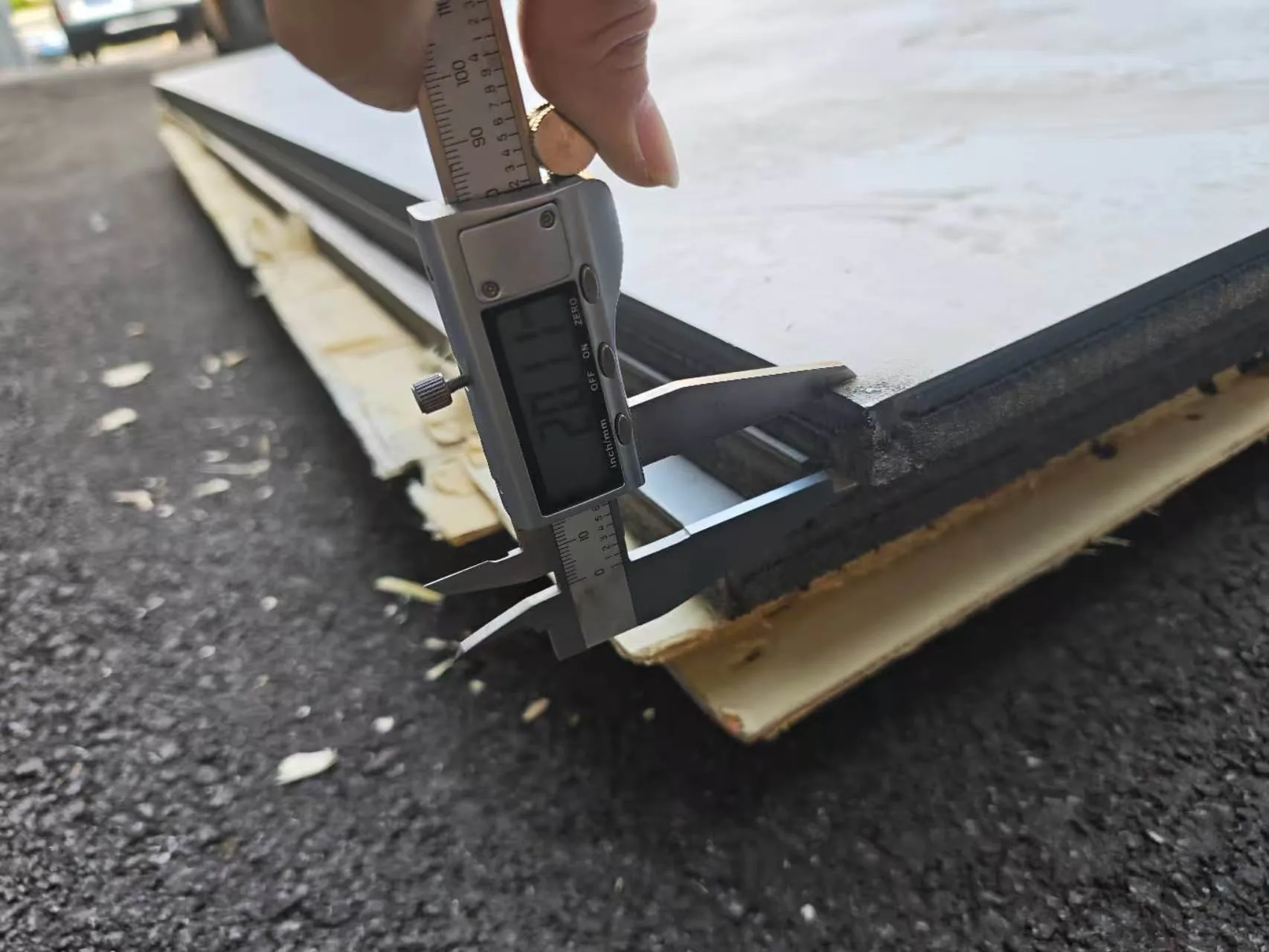
航舶合金特种板材精密测量:使用高精度仪器确保厚度偏差控制在标准值的50%以内
Massive FAQ: 12 Technical Insights for Chemical Engineers
- C-2000 vs C-276: What is the primary difference in selection?
While Hastelloy C-276 is a classic material with a proven track record, C-2000 offers a significant upgrade in versatility. C-276 can struggle in oxidizing environments like nitric acid or in mixed acid streams. C-2000, with its 23% Chromium and copper addition, provides superior resistance in these oxidizing environments while maintaining or exceeding the reducing acid resistance of C-276. If your process involves shifting conditions, C-2000 is the safer choice.
- What is the Pitting Resistance Equivalent Number (PREN) of C-2000 and why does it matter?
The PREN for C-2000 is typically around 74. In the world of corrosion science, PREN is a relative measure of an alloy's resistance to localized pitting in chloride-containing environments. A PREN above 40 is generally considered "super-austenitic" or high-performance. At 74, C-2000 is in an elite class, making it suitable for hot seawater, concentrated brine, and bleach solutions where even 316L or 904L would fail within days.
- Can C-2000 be used in high-concentration Nitric Acid?
Yes. The 23% Chromium content in C-2000 forms a very stable and tenacious passive oxide film that is highly resistant to oxidizing acids. This makes it an excellent candidate for equipment used in the production of fertilizers, explosives, and other nitric acid-based processes, where it significantly outlasts C-276 and even some dedicated "nitric grade" stainless steels.
- How does C-2000 handle mixed acids (e.g., H2SO4 + HCl)?
Mixed acid environments are notoriously difficult for materials because they combine oxidizing and reducing agents. C-2000's balanced chemistry (High Cr for oxidizing, High Mo and Cu for reducing) allows it to handle these "hybrid" environments exceptionally well. This makes it the material of choice for multi-product pharmaceutical plants and hazardous waste incineration systems.
- What are the recommended storage standards for Hangbo C-2000 products?
To preserve the material's integrity, C-2000 should be stored in a clean, dry, and covered area. It is critical to avoid direct contact with carbon steel racks or tools, as this can lead to "iron contamination." Iron particles embedded in the surface of the alloy can act as initiation sites for localized corrosion. We recommend using wooden dunnage or stainless steel storage solutions.
- Is C-2000 susceptible to Stress Corrosion Cracking (SCC)?
Hastelloy C-2000 is highly resistant to chloride-induced Stress Corrosion Cracking (SCC), which is a common failure mode for standard stainless steels in high-temperature chloride environments. Its high nickel content (~59%) provides the fundamental resistance to SCC, making it a reliable choice for heat exchangers operating with brackish cooling water.
- How can I verify the authenticity of a Hangbo C-2000 Mill Test Certificate (MTC)?
Every shipment from Shanghai Hangbo Alloy Group includes a comprehensive 3.1 Mill Test Certificate (MTC) according to EN 10204. You can verify the authenticity by checking the heat number stamped on the material against the MTC. Furthermore, we provide a digital verification service where you can scan a QR code or contact our technical department for a direct verification against our master records.
- What specific filler metal should be used for welding C-2000 components?
For optimal corrosion resistance, we recommend using matching composition filler metals. The standard designation is ERNiCrMo-17 (for GTAW/GMAW) or ENiCrMo-17 (for SMAW). Using an "over-alloyed" filler metal can sometimes be beneficial in certain extreme environments, but matching the base metal is the most common and reliable practice for C-2000.
- Does C-2000 require solution annealing after cold working or forming?
If the degree of cold deformation exceeds 15% (e.g., in deep drawing or tight radius bending), we strongly recommend a full solution annealing treatment. This restores the alloy's ductility and ensures that the corrosion resistance is not compromised by the high internal stresses or the formation of strain-induced precipitates. The annealing should be followed by a rapid quench.
- What is the maximum operating temperature for C-2000 in pressure vessel service?
According to the ASME Boiler and Pressure Vessel Code (Section VIII), Hastelloy C-2000 is typically rated for service up to 427°C (800°F). While the alloy can withstand higher temperatures without melting, its long-term creep-rupture strength and phase stability are optimized for service below this threshold. For higher temperature applications, alloys like Inconel 625 might be considered.
- Is C-2000 suitable for pharmaceutical "high-purity" applications?
Absolutely. C-2000's exceptional corrosion resistance means that metal ion leaching (especially Ni, Cr, Mo) is kept to an absolute minimum, even in the presence of aggressive cleaning agents or acidic formulations. This ensures that the final pharmaceutical product remains free from metallic contamination, satisfying FDA and GMP requirements.
- What stock forms are currently available in the Hangbo global inventory?
Shanghai Hangbo Alloy Group maintains one of the largest inventories of C-2000 in Asia. We stock cold-rolled sheets (0.5mm - 3.0mm), hot-rolled plates (up to 60mm), round bars (6mm - 350mm), and seamless/welded tubing. We also have the capability to provide custom-forged rings, flanges, and semi-finished components tailored to your specific engineering drawings.
Hangbo Supply Matrix: Your Global Partner in Special Alloys
Shanghai Hangbo Alloy Group provides a comprehensive matrix of high-performance alloys designed for the most challenging industrial applications. Our global logistics network and inventory management system ensure that we can fulfill orders ranging from small-scale prototype quantities to multi-hundred-ton project requirements with industry-leading lead times.
- Hastelloy Series Grades:
- Hastelloy C-2000 (UNS N06200): The versatile all-rounder for oxidizing and reducing environments.
- Hastelloy C-276 (UNS N10276): The classic choice for reducing acid service.
- Hastelloy C-22 (UNS N06022): Exceptional resistance to localized attack and oxidizing media.
- Hastelloy B-3 (UNS N10675): Specifically designed for concentrated Hydrochloric Acid (HCl) service.
- Comprehensive Stock Forms and Services:
- Round Bars: Diameter 6mm to 350mm, available in peeled, ground, or polished finishes.
- Sheets and Plates: Thickness from 0.5mm to 60.0mm. We offer precision waterjet, laser, and plasma cutting to your exact dimensions.
- Forged Rings and Flanges: Up to 3000mm OD, tailored for high-pressure vessel applications and heat exchanger tube sheets.
- Fasteners and Fittings: Custom manufacturing of bolts, nuts, and piping components in C-2000.
For technical consultations, detailed corrosion data, or formal RFQs, contact the Shanghai Hangbo Alloy Group Engineering Team today. We don't just supply metal; we provide integrated corrosion solutions that protect your assets and extend the lifecycle of your critical infrastructure. Partner with Hangbo—where science meets metallurgy.
本站部分文字及图片来源于网络,版权归原创者所有,如有侵权请及时通知我们。